AI's Impact on Mobile Technology Trends: The Future Unveiled

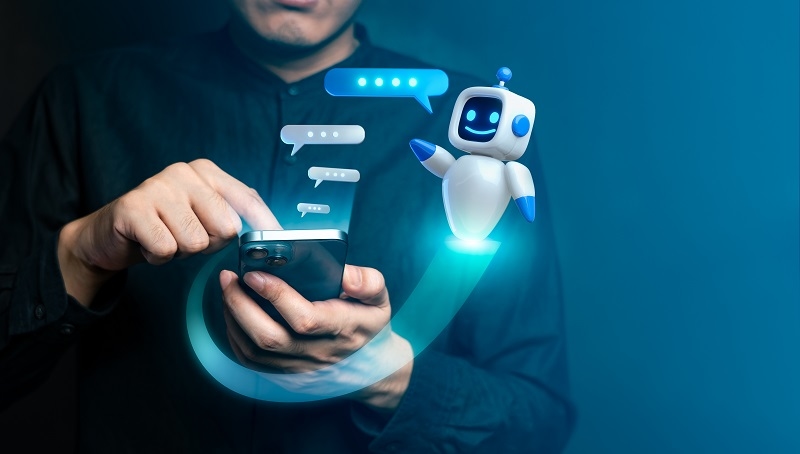
AI is no longer just an industry jargon. It is now a key player in the exciting trends we see today in mobile technology. The impact of artificial intelligence on mobile technology has been profound ranging from predictive text to AI integrated cameras. Our current smartphones are more than just tools.
They accompany us throughout our daily life and as new smart features and technologies are developed, they are now able to understand our behaviors, needs, and offer real-time personalized interactions.
According to several studies, within the first minute of picking up a smartphone, users interact with some form of AI feature, be it automation tools or voice assistants. Even unlocking your device through facial recognition is a part of the bigger picture called mobile automation aimed at simplifying processes and making life easier for the user.
You are about to read how AI affects mobile devices on the most critical levels including performance, personalization, security, and innovation. If you are watching the further development of AI and mobile devices, this is the area that is expected to grow most rapidly.
The Conjunction of Mobile Technology and Artificial Intelligence.
Both AI and mobile development are improving side by side. With the rise of mobile 5G networks, cutting edge technology like smartphones AI applications are being developed. These advancements have caused a shift in trends within mobile technology which now aim to improve user experience, simplify tasks, and make interactions more intelligent.
Here’s why AI is at the heart of these advancements:
Enhanced Performance: New smartphones and mobile technology devices have NPUs (Neural Processing Units) which greatly improves efficiency on-device AI performance.
Endless Information: There are an enormous amount of Machine Learning Devices (MLDs) while smartphones serve as the main device collecting the data.
Edge AI: A large number of AI aspects are performed within the device. This allows greater privacy among users as less cloud processing is required.
There is no doubt that smartphones have evolved. They used to be regarded as static objects, however now they are capable of forgetting, learning and responding to interacting in ways that were highly advanced just a few years ago.
Dive Deeper: Cybersecurity in 2025: Protect Your Computer from Hackers
Voice Assistants Are Smarter Than Ever
Incorporated AI features in mobile devices are perhaps more evident in the addition of voice assistants. Siri, Google Assistant, and Alexa have modified beyond being mere helpers to becoming the entire command center for mobile activities.
Advancements in Voice Assistants:
Contextual Background Knowledge: Voice assistants now have the AI capability to understand elaborate queries and handle subsequent questions.
Multilingual Support: Language models nowadays pay more attention to speakers of other languages and non-English ones to increase their performance.
Cross-Platform Integration: Assistants can now manage smart home gadgets, send texts, play music, order rides, and more—all usually without user interaction with the device.
As voice input technology improves, it becomes easier to use mobile devices. The increasing sophistication of mobile applications does make them easier to use. In the near future, typing might become an old fashioned way to interact with devices.
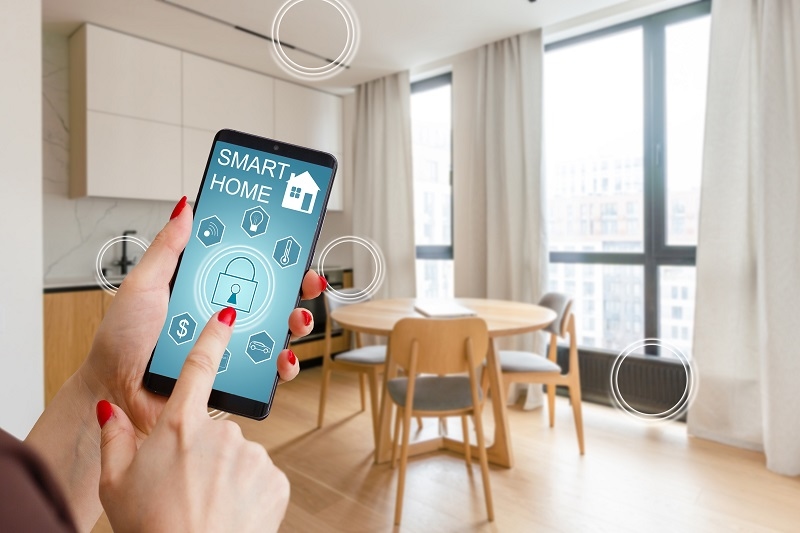
The New AI Features That Evolve With You
AI does not stop at enabling communication between phones; it is also aiding in the development of futuristic thinking. Machine learning models are now enabling smart features in smartphones to be more advanced by personalizing users' experiences to the individual’s habits.
AI Features of Today And Their Functions:
Application Recommendations: Your gadget suggests apps based on where you are, what time of day it is, and what you have been doing recently.
Camera Adjustments: AI adjusts the light, enhances blur, and improves faces all at once.
Battery Optimization: Phones optimize energy consumption according to the patterns picked up from the phone usage.
Users of smartphones now enjoy processes that are performed natively and in an automated way rather than doing them actively. Furthermore, almost all of these processes automation makes the phone influential and autonomous at the same time.
The Development of New Forms of Automation: Beyond Just Easing Work
Automation deals with the capability of a mobile phone to accomplish a duty with little or no manual command. AI has taken over completing these critical features in mobile phones including but not restricted to turning on Do Not Disturb mode and filtering spam messages.
Important Areas of Automation:
Security: AI technologies that do facial and fingerprint identification are much more precise and reliable now.
Text Prediction and Autofill: AI improves predictive typing, autocorrect, and suggestions tailored to the user.
Routine Scheduling: Automation has advanced to the point where the device now recognizes activities like sleeping, driving to work, or attending meetings, and changes settings automatically.
All of these changes result in a phone that acts as an assistant. The phone synchronizes with the user’s needs and makes changes seamlessly and without the need for active engagement from the user.
AI in Mobile Photography: The New Standard
Within the spectrum of mobile technology trends, photography is arguably the most affected area by AI. Phones now come equipped with cameras that can preemptively optimize scenes, follow action, and enhance pictures before you even press the shutter button.
AI Features in Modern Mobile Cameras:
Scene Recognition: Sets portrait, landscape, food, etc types and modifies corresponding parameters.
Night Mode: AI makeup methods enhance definition in low-light images by merging several frames with different exposure levels.
Portrait Mode: Adding optical effects, the system uses depth sensing and subject segmentation for use of lenses common in DSLR cameras.
Integration of AI into mobile photography also includes video, where stabilization, background blurring, and real-time filters have expanded from being premium features. With cameras being made smarter, expectations increase for users on every price tier.
Personalized User Experiences Through AI
Through AI, smartphones are enabled to study user behavior to offer more intuitive and tailored experiences. Such tailoring is an emerging benchmark of mobile devices in the era after this generation.
Tailored Experiences with the Help of AI
Content Tailoring: Newsfeeds, playlists and timelines on social media are customized.
Smart Alerts: Based on user interaction with the device, every alert is marked as a priority.
Brightness and Volume Control: Settings are adjusted depending on the user and surroundings.
The provided features exemplify how AI technology is facilitating user interaction with devices. For instance, phones are capable of contextual response such that they do not simply react.
Mobile Security: Advancements Through AI
It's quite remarkable how far mobile security has come, from simple password locks to complex AI driven protections. Nowadays, your phone can identify you using a combination of biometrics and behavior patterns.
Innovations in AI Security:
Facial Detection: Where performance is concerned, accuracy and security improves along with the ability to work in differing light conditions.
Behavioral Biometrics: Swiping and typing speed is used to identify unauthorized users which is quite dynamic in nature.
Fraud Prevention: Any unusual payment or app activity is monitored in real time by AI systems.
With the progress of mobile automation and AI, the role of protecting sensitive data and preventing unauthorized access will be more profound.
How AI Is Changing The Design Of Hardware?
AI does not only impact software, but rather, has a broad influence on the entire ecosystem of devices. We are witnessing a mobile technology megatrend that includes real-time translation, AR enablement, and on-device learning as many chipsets now come with dedicated mobile AI engines.
Impacts of AI on Hardware:
Neural Processing Units (NPUs): NPUs enable expedited AI computations without depleting battery life.
Heightened Responsiveness: Cameras, gyroscopes and microphones are becoming more advanced and responsive in support of smarter features.
Adaptive Displays: Displays capable of dynamically adjusting the refresh rate and color based on user activity.
The AI is now being embedded into the structure of the devices itself, synchronizing mobility with functionality. Such steps emphasize the urgency to bolster smart, efficient functionalities and fluid performance.
Expand Your Knowledge: The Future of Smartphones: Trends You Should Watch in 2025
The Outlook: Boundless Opportunities with AI Technology and Mobile Devices
Even as AI matures, there's already a role to play in mobile devices. The following are areas we can expect to see improvement within the near future:
Predictive Health Monitoring: The ability to detect and diagnose ailments using AI driven mobile technology.
Real Time Translation During Calls: The telephonic conversations will have the option of translation through advanced voice assistants that can be activated during calls.
Emotion Recognition: Devices understanding tone alongside facial attributes for more human and kind interactions.
AI-Powered Accessibility: More sophisticated aid for the disabled, AI powered transcription, gesture control, and functioning with voice commands.
All of these suggestions have an impact on making smartphones sophisticated, more user friendly, and enhancing usability in a variety of fields.
Conclusion
An emerging sector of Artificial Intelligence technology enables mobile devices to exhibit seemingly unprecedented levels of intelligence, speed and personalization. Voice and contextual understanding offered by AI assistants and Other AI mobile technologies are at the center of changing trends in mobile technology developed on a daily basis.
With impending AI-based automation systems, tasks are not only easier to complex but also offers changes in outlook and redefines expectations out of the devices. Phones have now transcended the definition of a simple gadget; they are now intelligent aides who adapt to evolving needs.
This content was created by AI